
Catoosa County Criminal Court Records
Catoosa County criminal court records begin when a criminal case opens in court. The court file may start with an accusation, indictment, warrant, citation, or other charging document and then grow through arraignment, motions, hearings, plea negotiations, trial settings, disposition, and sentencing. The Clerk of Superior, State & Juvenile Court is the main local record office for Superior and State Court case files. The court calendar can show events, while the CM Web Search can help locate the case by party, associated party, or case number.
Superior Court handles felony trials in Catoosa County. State Court handles misdemeanors below felony grade, traffic violations, arrest and search warrant applications, preliminary hearings, and civil matters not reserved to Superior Court. The Solicitor General prosecutes misdemeanors and county-code violations in State Court, including simple battery, simple assault, stalking, DUI, shoplifting, criminal trespass, and traffic charges. Felony prosecutions use the District Attorney in the Lookout Mountain Judicial Circuit. For the arrest-to-charge path before the full case outcome, use the Catoosa County arrest records and charges page.
Search Catoosa County Criminal Court Records
The primary lookup path is the Catoosa County Public Records CM Web Search, also linked from the Lookout Mountain Judicial Circuit Catoosa page. The visible search routes are Search By Party, Search By Associated Party, and Search By Case Number. The public page includes a disclaimer that the county tries to ensure accuracy but does not guarantee accuracy or reliability. Certified or official use should be routed to the clerk or eCertification.
- Start with the Catoosa circuit page or CM Web Search and decide whether the case is likely Superior Court felony or State Court misdemeanor.
- Search by the defendant's name when no case number is known, or use the case-number path when a notice or docket gives the number.
- Review docket entries for filed charges, arraignment, motions, hearings, plea or trial events, disposition, and sentence.
- Check the Catoosa County Court Calendar if the user needs a current date or hearing setting rather than the full case file.
- Call the clerk at (706) 935-4231 or use eCertification for certified criminal court records and official copies.
For State Court tickets and criminal cases, the county State Court page gives a specific phone path: call Tracy Brown's number at (706) 935-4231, press 2 for State Court, then press 1 for tickets and criminal cases. For sheriff-held arrest, booking, warrant, or local criminal-history material, use the Sheriff's Records Division or the GovQA Sheriff's Office Records tab.
Catoosa County Criminal Case Stages
A criminal court record is easiest to read as a sequence. The first filed charge is not the final result. A defendant may have charges amended, reduced, dismissed, transferred, resolved by plea, tried to a verdict, or sentenced after conviction. Catoosa criminal court records can also show preliminary hearings, warrants, bond events, diversion referrals, and probation terms when those events are part of the court file.
Case flow: Charges Filed › Arraignment › Pretrial and Motions › Plea or Trial › Disposition › Sentencing
| Stage | What Happens |
|---|---|
| Charges filed | The prosecutor, officer process, or grand jury creates the charge that opens or advances the criminal case. |
| Arraignment | The defendant is formally advised of the charge and enters a plea such as guilty, not guilty, or nolo. |
| Pretrial and motions | Attorneys file requests, discovery issues are managed, hearings occur, and plea negotiations may continue. |
| Plea or trial | The case resolves by plea, bench trial, jury trial, dismissal, transfer, or another court action. |
| Disposition and sentence | The record states the result and any jail, fine, probation, restitution, or other court-ordered terms. |
Catoosa County Criminal Record Fields
Research did not reach a live sample criminal case in CM Web Search, so this field list is based on the official Catoosa record inventory, court-role summaries, and criminal-record terminology documented in the research. A criminal case file may contain more or less depending on the court level, public access status, case age, and whether the matter is still pending.
| Field | What It Shows |
|---|---|
| Case number | The clerk or court number used to track the criminal case, citation, accusation, indictment, or docket. |
| Defendant | The person charged in State of Georgia versus defendant criminal filings. |
| Charges | The accusation, indictment, warrant, citation, statute, or offense label filed in court. |
| Hearings | Arraignment, preliminary hearing, motion hearing, trial setting, continuance, or sentencing date. |
| Plea | The defendant's formal answer, such as guilty, not guilty, or nolo. |
| Disposition | The current or final outcome, such as guilty, dismissed, transferred, acquitted, or otherwise resolved. |
| Sentence | Jail time, probation, fines, court costs, restitution, or conditions ordered after conviction or plea. |
Catoosa Charges vs Convictions
Being charged in Catoosa County is not the same as being convicted. A criminal court record may show charges that were filed after arrest and later reduced, amended, dismissed, transferred, resolved through diversion, or tried to an acquittal. The Solicitor General page says the office may refer appropriate State Court cases to pretrial intervention or diversion programs, negotiates pleas, recommends sentences, and prosecutes cases transferred from Superior Court or municipal courts.
| Point | Charge | Conviction |
|---|---|---|
| Meaning | An allegation filed or pursued in court. | A final result after guilty plea, verdict, or similar court finding. |
| Timing | Appears early or during the case. | Appears after plea, trial, or final disposition. |
| Record impact | May remain visible unless dismissed, restricted, sealed, or otherwise limited. | May carry sentence, probation, fines, custody, or collateral consequences. |
| Who handles it | Solicitor General for many misdemeanors, District Attorney for felonies. | The court enters the result and sentence in the case record. |
Catoosa County Criminal Prosecution Records
The Catoosa County Solicitor General is Doug Woodruff and prosecutes misdemeanor cases, county-code violations, and traffic charges in State Court. The office conducts bench trials, jury trials, and hearings, represents the State in appellate matters, negotiates pleas, provides victim information and support, recommends sentences, and may refer appropriate cases to diversion or pretrial intervention. The page lists the courthouse address, mailing address, phone, fax, and weekday hours with Thursday closed for court.
The District Attorney handles felony prosecutions in the Lookout Mountain Judicial Circuit. The research found that the LMJC District Attorney page links discovery orders and protective orders for certain records by county, including Catoosa County. That is important for criminal court records because discovery, victim data, investigative evidence, medical information, and safety-sensitive material can be restricted even when the docket or final disposition is public. The Public Defender's Catoosa office is also part of the courthouse ecosystem for eligible defendants, with a physical office at the courthouse and a mailing address in Ringgold.
State Criminal Record Resources
The Georgia Department of Corrections offender search is an assigned source for Catoosa County criminal court records when a case has led to state prison custody.
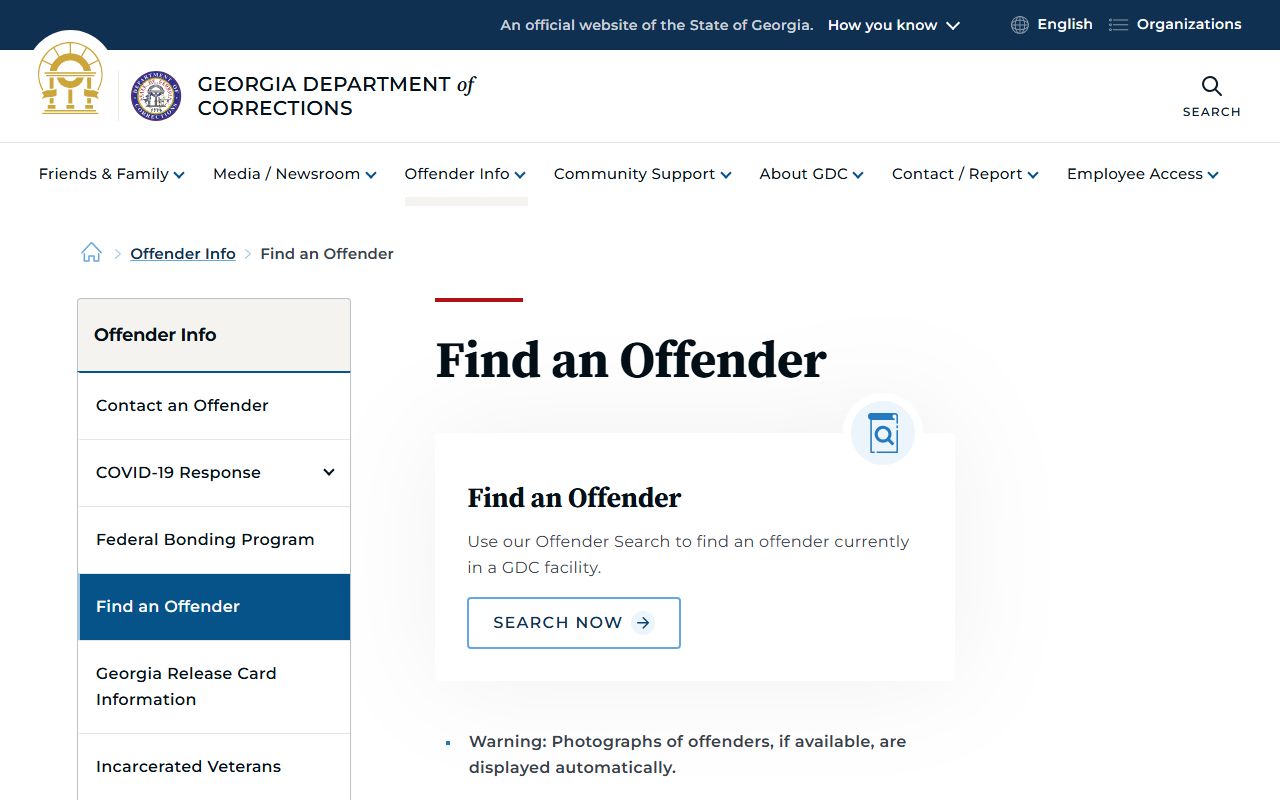
Use the GDC source for sentenced state offenders, not for people who are only in the Catoosa County Jail before trial.
The Georgia.gov Find an Offender page explains the statewide offender search and notes that county jail inmates should be searched through the county website.
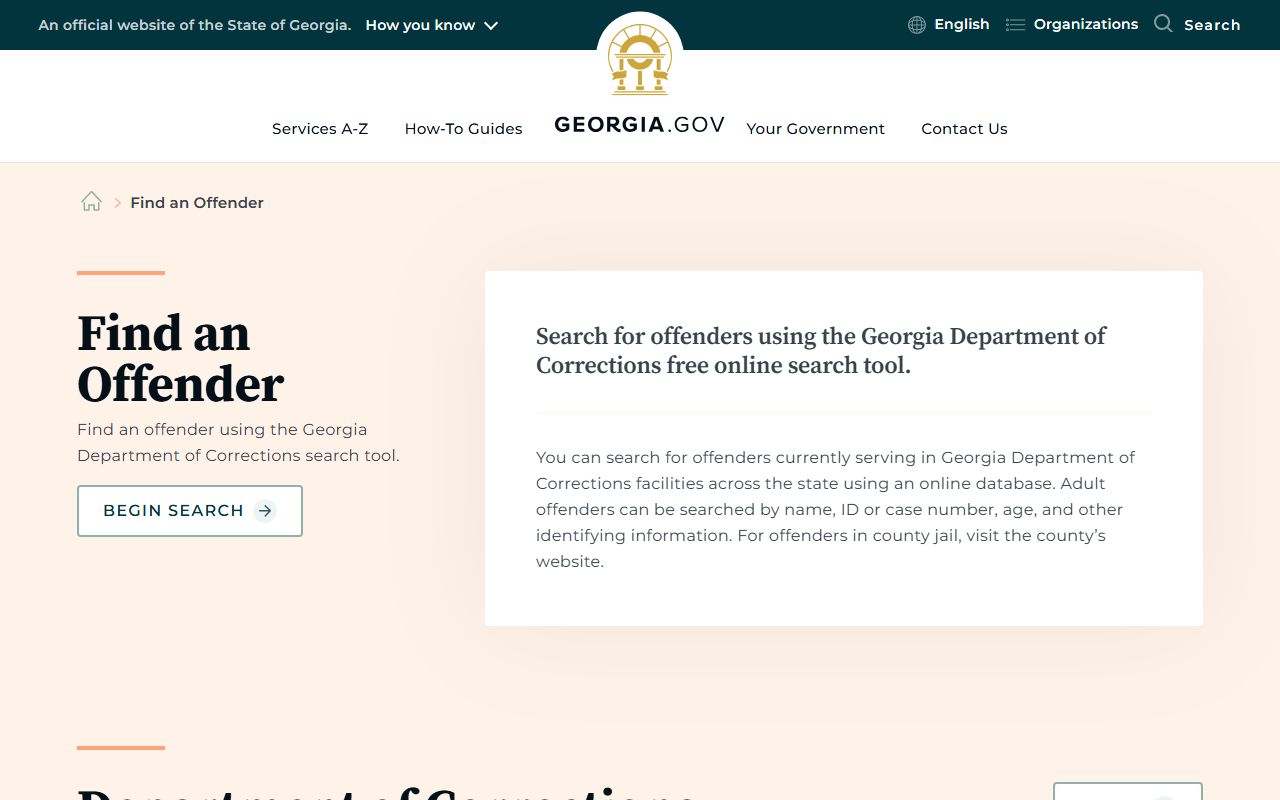
This distinction keeps Catoosa County criminal court records separate from jail custody lookup and state prison custody lookup.
The GBI criminal-history record restriction page is the assigned state source for Georgia restriction rules.
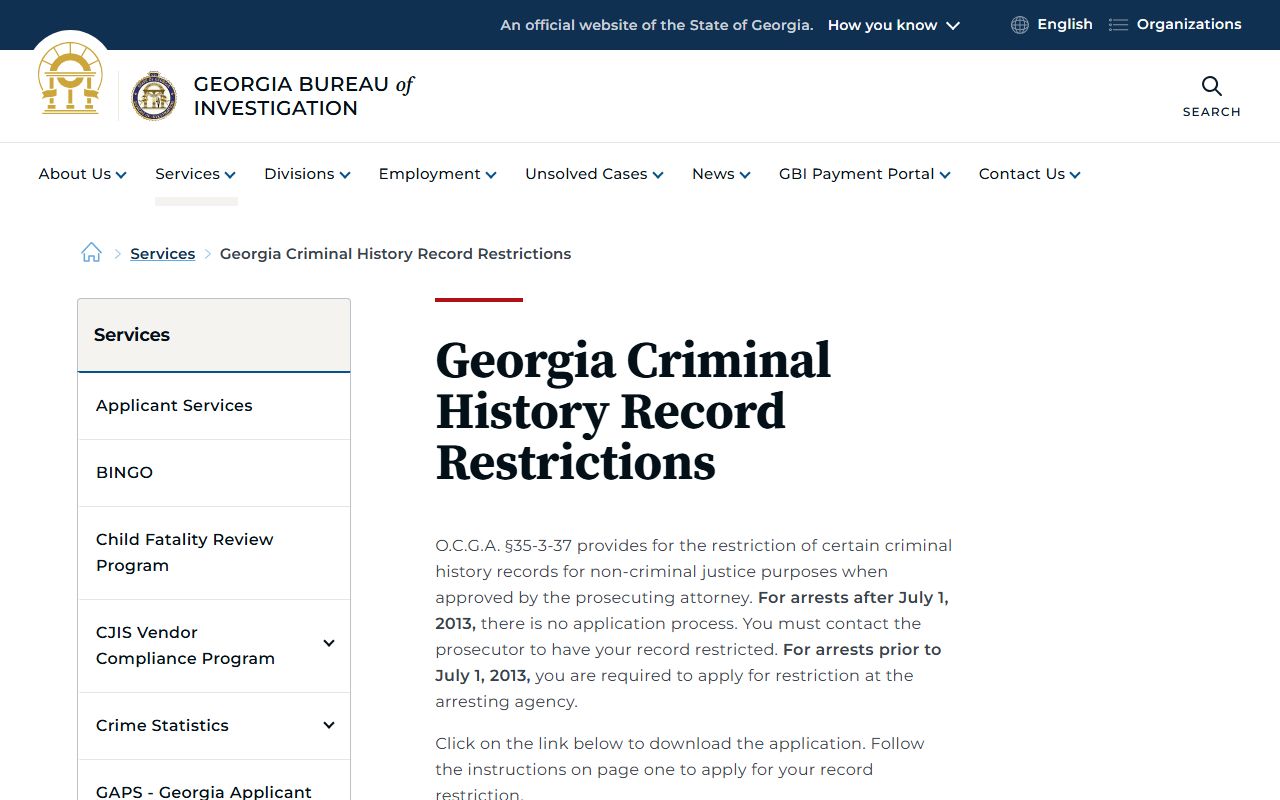
That source is essential when a Catoosa County criminal court record has an eligible arrest, dismissal, or restriction request.
Catoosa Sealed vs Restricted Records
Georgia commonly uses the term record restriction for expungement-like relief. The GBI explains that O.C.G.A. Section 35-3-37 allows certain criminal-history records to be restricted for non-criminal-justice purposes when approved by the prosecuting attorney. Court sealing is separate from the public criminal-history restriction process and may require a court procedure, such as a Rule 21 sealing process for court records.
| Point | Sealed Court Record | Restricted Criminal History |
|---|---|---|
| Main effect | Limits public access to a court file or part of a court file. | Limits public or non-criminal-justice access to eligible criminal-history records. |
| Route | Usually requires court authority or a sealing procedure. | Uses Georgia restriction rules and prosecutor approval for eligible records. |
| Local pre-2013 arrests | May still need court disposition documents if court sealing is requested. | Catoosa Sheriff's Records FAQ says apply at the sheriff with disposition and the exact fee. |
| Post-2013 arrests | May require court action if the court file itself must be limited. | GBI says contact the prosecutor rather than applying through the arresting agency. |
Catoosa Criminal Court Access Limits
Criminal court records in Catoosa County are generally public unless a law, court rule, or court order limits access. Georgia's Open Records Act covers many agency records, while Uniform Superior Court Rule 21 addresses court-record access limits and Rule 22 addresses open courtroom access. Those rules do not mean every police report, discovery file, juvenile matter, victim record, or sealed case is open for public use.
Juvenile records require extra caution because O.C.G.A. Section 15-11-708 separates juvenile law-enforcement records from adult arrest records and limits inspection. Discovery protective orders can also restrict distribution of sensitive evidence. Records may be redacted for Social Security numbers, financial account numbers, protected victim information, minor details, medical or mental-health data, and active investigative material. Note: A visible Catoosa County criminal court docket does not guarantee that every document in the case file is public.